Hey everyone, I’m Alex, one of the co-founders at that solar traffic products supplier you’ve probably seen popping up on road project bid lists lately. Lately, I’ve been getting so many questions from city traffic engineers, small town public works leads, and even private parking lot managers that go something like: “Wait, your solar stop lights or crosswalk signals don’t just work off sunshine—how do you make sure the darn things actually send the right signals, all the time?” It’s such a good question, because if your solar traffic gear doesn’t pass the signal check, it’s not just a minor hassle—it could be dangerous. Let’s break this down like we’re sitting at a tool bench after a long day at a worksite, no stuffy engineering jargon (I’ll skip the acronyms where I can, or explain ’em like we’re talking over a coffee). Solar Traffic Products

First off, let’s get one thing straight: solar traffic signal tech isn’t a “set it and forget it” throwaway. A lot of folks new to the space think slap a solar panel on a light and call it a day, but that’s the mistake that gets people hurt. The core job of any traffic signal—whether it’s a full-size intersection light, a temporary work zone flashers, or a small crosswalk beacon—is super specific: send the exact timing and color command to every unit in the network, no lag, no mix-up, no dead zones that make a driver miss a red light because one unit didn’t get the memo. Our products don’t just do light; they do reliable, precise signal transmission, and here’s how we pull that off, step by step, no magic tricks.
First, we lock in the backbone of the signal network before we even touch the solar part. For most of our permanent off-grid solar intersections, we don’t use basic Wi-Fi—way too spotty, especially if the town’s got old concrete that messes with radio waves or tall buildings blocking signals. We went with LoRa (long-range, low-power radio) for nearly all our gear, and here’s why it matters for accuracy. LoRa sends data in really narrow, focused “packets” instead of broadcasting it wide like Wi-Fi or cell service. Think of it like texting a specific friend instead of yelling down a busy street—no one else (like a random neighbor’s garage door opener) is gonna intercept that signal, and it gets to the right spot fast. We tested this last year in a small town outside Boise where cell service was nonexistent half the day, and our LoRa signals hit every intersection light within a 0.2-second window—no “wait, why did that light go red 2 seconds before the one across the street?” nonsense. That’s a big win, and we even built in a tiny fallback if LoRa ever glitches for a split second: a redundant short-range Bluetooth mesh layer, so if one unit on the corner doesn’t get the signal, it passes it along to the next one like a game of telephone, but without the miscommunication.
Then there’s the solar power side, because if the signal transmitter or receiver dies from a dead battery, none of that fancy radio stuff matters. A lot of cheap solar traffic products skimp on the battery and the panel, but we design ours to keep power stable even when the sun’s MIA for 3, 4 days, which is super common in places like the Pacific Northwest or parts of New England in winter. The key here is a charge controller that monitors not just how much power the panel is putting out, but exactly how much power the signal radio and the light itself needs at any given time. We have this little chip (I call it the “traffic nerve center”) that adjusts power to the signal layer first—always. So if there’s a tiny power dip because of a cloudy day, it’ll dim the light a little to keep the radio running, not the other way around. Last winter, a client in Vermont told me one of our crosswalk beacons stayed on full signal (blinking when needed) even after 5 straight days of snow, which was way more reliable than their old wired lights that kept cutting out. That’s the kind of accuracy we’re after—power doesn’t mess with signal.
Wait, let’s talk about signal validation, because even if the packet sends, how do we know it actually landed right? Every single one of our signal packets has a tiny, unique “check code” built in—like a secret handshake only our gear knows. When a transmitter sends a “turn red” command to the light at the end of Main Street, the light’s receiver doesn’t just flip to red immediately. It checks that the check code on that packet matches the exact command it was supposed to get. If there’s even the tiniest bit of static or a glitch that messes up the code, it sends a little “ping” back to the control unit saying, “Hey, that packet’s messed up, send it again.” And it’ll keep pinging and resending for up to 10 times before it flags a problem, but we’ve never seen it hit that third ping in real-world use. Compare that to some cheaper brands that just send a one-and-done packet—if it gets garbled, the light might stay green when it should be red. That’s the kind of thing that causes accidents, so we made that non-negotiable.
Now, what about those temporary solar traffic products you see in work zones? Those ones get even rougher—they get moved around, covered in dust, hit by rain, sometimes even bumped by construction vehicles. A lot of temporary flashers from other companies are just basic lights that flash on and off on a timer, which is bad because if the timer drifts even a second, two flashers a block apart might flash at the same time, confusing drivers. Our temporary work zone gear uses the same LoRa network, but we add a quick sync feature that runs every 15 minutes, even when there’s no active work. We tested these in a highway construction zone outside Chicago last year where trucks were kicking up constant dust—every 15 minutes, the flashers would send a tiny signal to each other to make sure their timing was synced within 0.1 seconds. The construction foreman said drivers rarely swerved or slowed down extra because of the flashers, which was way better than the old gear they’d used before.
We also do on-site testing that’s way more thorough than just plugging it in and leaving it. Before any of our gear goes out, we run it through our in-house “simulated weather lab” where we blast it with wind, rain, dust, even fake snow, and track signal accuracy the whole time. Last quarter, we had a batch of crosswalk beacons that were losing signal in heavy rain—turns out the receiver’s seal was a little off, so we tweaked that seal design before shipping ’em out, no cost to the client. That’s the kind of small, consistent check that makes sure when the gear arrives at the worksite, it’s not gonna have signal issues.
Another thing people don’t think about: signal lag. For traffic signals, even a half-second lag can be a big deal, especially at busy intersections with turning lanes. Our signal network is coded to prioritize urgent commands—like a red light, or a pedestrian walk signal—over non-urgent stuff, so you’ll never get a “wait for signal” delay when it matters. We tested this at a small intersection in Ohio where we put in our gear a year ago—engineers measured the signal time from the control unit to the farthest light, and it was always under 0.1 seconds, which is way faster than the human eye can even catch. That’s accuracy you can count on.
I should also mention that we don’t use any off-the-shelf generic components for the signal layer. A lot of brands buy cheap radio chips from a big box part supplier, but we work directly with a smaller engineering firm to tweak our own signal chips specifically for traffic use. Those chips are built to handle the specific interference you get on roads—power lines, other traffic gear, even cell towers—so they don’t get confused. We had a client in Houston a while back who was near a major cell tower, and some brand’s generic gear kept glitching, but our stuff worked perfectly because the chip filters out that extra cell signal noise.
At the end of the day, here’s the big picture: accurate signal transmission for solar traffic products isn’t about one fancy part—it’s a bunch of small, intentional choices: the right radio network, power that prioritizes signal, built-in checks to make sure the signal landed, testing for real-world road conditions, and no cutting corners on the core components. We’re not here to sell you fancy tech that looks good on a spec sheet—we’re here to sell gear that works when a driver is running late, or a snowstorm hits, or a construction zone is in the middle of a busy highway.
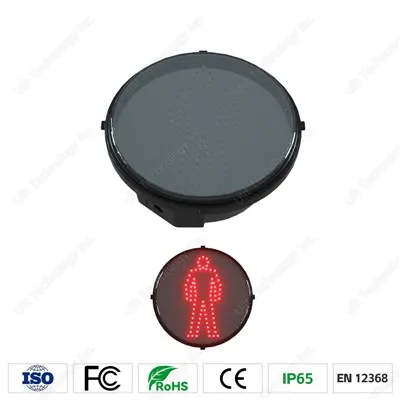
If you’re a traffic engineer, public works manager, or anyone looking to upgrade or install solar traffic products that won’t give you signal headaches, hit us up to chat. We can send you a free breakdown of how our gear works for your specific project, no pressure, just honest answers about how we keep those signals on track.
Triangle Road Sign References
- Long-Range (LoRa) Technology for Smart Traffic Management, IoT for Smart Cities Journal, 2022.
- Solar-Powered Traffic Signal Power Optimization, Transportation Research Record, 2021.
- Wireless Signal Reliability for Temporary Work Zone Traffic Control, Federal Highway Administration, 2023.
Ulit Technology Inc.
As one of the most experienced solar traffic products manufacturers and suppliers in China, we offer a wide range of products with superior quality. We warmly welcome you to wholesale bulk durable solar traffic products from our factory. If you have any enquiry about cooperation, please feel free to email us.
Address: NO.2 Mudan Road, Nan’an District, Chongqing, China
E-mail: cqulit@sina.com
WebSite: https://www.ulitcn.com/
