If you’ve ever stood beside a down-the-hole (DTH) drill in action—its hammer pounding deep into rock, dust hanging thick in the air, and the low, constant rumble vibrating through the ground—you know these machines are workhorses for mining, quarrying, water well drilling, and even geothermal projects. As a DTH drill supplier, I’ve spent more than 15 years walking job sites, talking to drill operators, and troubleshooting near-misses that could have turned into serious injuries or costly downtime. Most of the time, these incidents aren’t caused by faulty equipment—they’re caused by skipping basic safety steps, cutting corners on training, or assuming “it won’t happen on my shift.” Today, I want to break down the non-negotiable safety precautions for operating a DTH drill, lessons I’ve learned from working alongside thousands of operators, not just reading manuals. Down The Hole Drill
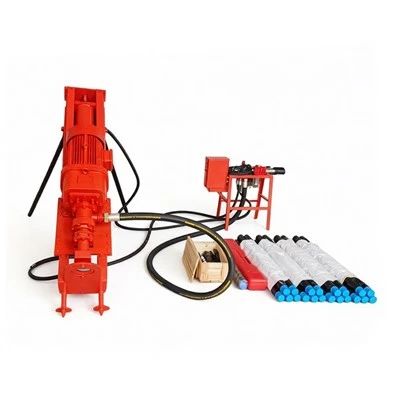
First, let’s talk pre-operation checks. I can’t tell you how many times I’ve arrived at a job site to find an operator jumping into the cab and firing up the drill without so much as a quick walkaround. DTH drills are complex, with high-pressure air lines, hydraulic hoses, rotating drill strings, and moving parts that shift under load. The first rule here is: never skip the pre-start inspection, and don’t take shortcuts. Last year, a quarry operator in West Virginia skipped checking the air hose connections on his DTH drill. When he fired it up, a 2-inch pressurized air line burst, whipping around and hitting a coworker in the shoulder, breaking his clavicle. That incident could have been avoided with a 5-minute walkaround. Let’s get specific on what to check. Start with the drill string: make sure all drill pipes are properly torqued, no threads are stripped, and the bit is not cracked or worn thin. A damaged bit can break mid-drill, sending shards of rock and metal flying at 300+ miles per hour—we’ve seen that put an operator in the ER and shut down a site for three days. Next, check all high-pressure lines: air hoses for frays, hydraulic hoses for bulges or cuts, and fittings to ensure they’re secured with safety clips, not just hand-tightened. Then, the stability of the drill itself: DTH drills often operate on uneven, muddy, or rocky ground. Before extending the outriggers, test the ground with a foot or a shovel—if it’s soft, lay down steel plates to distribute the drill’s weight (most full-size DTH drills weigh 10,000+ pounds). Never operate the drill on a slope steeper than the manufacturer’s recommended angle—even a 10-degree slope can cause a drill to tip, and when that happens, the result is catastrophic. Finally, don’t skip the emergency stop test: make sure both the cab-mounted E-stop and the remote E-stop (if your model has one) are functional, and that everyone within 50 feet of the drill knows where they are.
Next, training is non-negotiable, and I don’t mean the 2-hour video most sites make operators sit through. DTH drills are not forklifts—you can’t learn to operate one just by watching a senior operator for a day. When we supply a new drill to a client, our team spends two full days on-site training every operator who will run it, plus two designated spotters. The training isn’t just about how to pull the trigger or adjust drilling pressure; it’s about recognizing the subtle signs of a problem before it becomes an emergency. For example, a sharp drop in air pressure can mean a leak in the drill string, but it can also mean the bit is stuck in hard rock—an untrained operator might keep drilling, causing the drill string to twist and snap. A trained operator will slow down, adjust the pressure, and back off slightly to check. We also emphasize situational awareness during training: DTH drill operations create a “safety zone” of at least 75 feet around the drill, clear of all other workers, equipment, and debris. Last year, we had a client whose site foreman told a laborer to grab a tool from the drill while it was mid-cycle. The laborer walked into the safety zone just as a rock shard bounced off the drill mast, hitting him in the arm. He was lucky— the shard missed his neck by inches. That’s the problem with under-trained teams: they don’t understand that when that hammer is pounding, every second the drill is running, there’s a risk of flying debris, high-pressure air, and moving parts. Another training point: never operate a DTH drill if you’re fatigued, distracted, or under the influence of any substance that impairs reaction time. I’ve seen operators work 12-hour shifts, skip breaks, and make small mistakes that lead to big accidents. We tell all our clients to enforce mandatory 10-minute breaks every two hours for drill operators—fatigue is one of the leading causes of DTH drill incidents, and it’s completely preventable.
Then there’s personal protective equipment (PPE), and before you tune this out as the usual “wear a hard hat” lecture, let’s get into the specifics that most operators miss. A standard hard hat is not enough for DTH drill operation. You need a hard hat with a chin strap—most flying debris bounces off the brim, but it can still knock off an unfastened hard hat, leaving your head exposed. Next, eye protection: safety glasses or goggles that are impact-rated, and if your drill produces a lot of dust, add a face shield. I’ve had operators tell me they only wear glasses, not goggles, because they “fog up”—but we’ve seen a rock shard scrape an operator’s eye because he skipped goggles, leading to permanent partial vision loss. Hearing protection is non-negotiable too: DTH drills produce 105 to 120 decibels of noise, which is as loud as a chainsaw. Extended exposure without earplugs or earmuffs will cause permanent hearing loss—this isn’t a “future problem” either; one operator I know in Texas went deaf in one ear after just three years of running DTH drills without proper protection. For clothing: never wear loose-fitting shirts, hoodies, or jewelry that can catch on the drill’s rotating parts. I once had an operator’s hoodie string get caught on the drill mast—he yanked it to free himself, and his shoulder was dislocated. Wear fitted, heavy-duty work pants, steel-toe boots with slip-resistant soles (mud and rock make the drill floor slippery), and gloves that are puncture-resistant, not just work gloves. Avoid gloves with loose cuffs, and if you’re working near high-pressure air, never wear gloves that can trap air—compressed air can force air into your skin, causing a condition called air embolism, which is life-threatening.
Now, in-operation practices. This is where small, consistent habits make the biggest difference. First, never leave a running DTH drill unattended. I know sites have tight schedules, but stepping away for a coffee while the drill is pounding is a recipe for disaster. Last quarter, a client’s operator left his drill running to grab lunch; the bit got stuck in a vein of hard granite, causing the drill string to twist so hard it snapped, sending a 5-foot pipe crashing into the drill cab. The cab was reinforced, so the operator was unhurt, but the drill was totaled, and the site was shut down for two weeks. Even if you’re only stepping away for 30 seconds, turn the drill off and engage the safety lock on the mast— it takes 10 seconds, and it’s worth it. Next, monitor air and hydraulic pressure closely. Every DTH drill has a pressure gauge in the cab; don’t ignore it. If air pressure spikes suddenly, that means the bit is hitting something harder than expected, which can break the bit or the drill string. If hydraulic pressure drops, that means there’s a leak in the lines, and running the drill with low hydraulic pressure can damage the pump, leading to a costly repair. Also, when drilling in rocky ground, keep the feed pressure steady—too much pressure too fast can cause the drill to “jump” off the rock, sending debris flying. Operators often rush to hit their drilling target, and that’s when mistakes happen. Another key in-operation tip: when you’re finished drilling, never retract the drill string all the way while the drill is still pressurized. This is a mistake I see new operators make all the time. When you release the pressure from the drill string slowly, it can get stuck, and if you retract it too fast with pressure on, the bit can swing around, hitting the drill mast or the operator’s cabin. Always bleed off the air pressure gradually before moving the drill string. Also, never make adjustments to the drill (like changing a bit or tightening a pipe fitting) while the drill is running. Even if you think the mast is locked, moving parts can shift unexpectedly—use the lockout/tagout procedure every time you need to work on the drill, even for a small adjustment. Lockout/tagout is not just for electricians; it’s for every worker who touches a DTH drill. You turn off the power, lock the E-stop, and tag it with your name so no one accidentally turns the drill on while you’re working on it. It takes 30 seconds, and it’s the difference between safe work and a serious injury.
Then there are site-specific hazards, which are often overlooked because every job is different. For example, if you’re drilling in a remote area, you have to watch for overhead power lines. DTH drill masts can extend 30+ feet in the air, and even a small mistake in positioning can bring you within 10 feet of power lines— a distance that’s dangerous even if you don’t touch the lines directly, because electricity can arc. Always check with the utility company before starting a drill near power lines, and mark the clearance zone clearly. If you’re drilling in an area with loose rock on the slope above you, have a spotter monitor the slope while the drill is running. Rock falls are a silent hazard—one small rock rolling down a slope can hit an operator or the drill, causing damage or injury. Water wells are another common application for DTH drills, and here the hazard is groundwater. If you’re drilling in an area with high water tables, the drill can encounter pressurized water that bursts out of the hole at high speed. This can knock an operator off their feet, and the water can carry rock shards with it. Always install a blowout preventer valve on the drill string when drilling water wells, and have a plan to handle pressurized water before you start. Also, dust control is a safety hazard that’s often taken lightly. DTH drills produce large amounts of silica dust, which is a carcinogen that causes silicosis, a permanent and incurable lung disease. Operators who work with DTH drills for years are at high risk if they don’t have proper dust suppression. Most modern DTH drills come with water or air dust suppression systems, but make sure they’re functioning before you start drilling. Never disable the dust suppression system to get a better view of the hole—exposure to silica dust is a long-term hazard that will affect you for the rest of your life, and it’s completely preventable.
As a DTH drill supplier, my job isn’t just to sell you a drill—it’s to make sure you and your team go home safe every night. I’ve seen too many good people get hurt or lose their jobs because of preventable mistakes, and that’s why I’ve spent the last 15 years focusing on safety as much as on equipment performance. If you’re in the market for a new DTH drill, or if you need to improve safety on your current job sites, don’t hesitate to reach out for a consultation. We offer on-site safety training, pre-operation inspection checklists, and equipment tailored to your specific application to minimize risk. Safety isn’t a one-time thing—it’s a daily habit, a team effort, and a commitment to putting people before deadlines. If you have questions about DTH drill operation, safety protocols, or the right equipment for your project, contact us to discuss how we can help you keep your team safe and your operations running smoothly.
Air Leg References:
- Mine Safety and Health Administration (MSHA). Safety Standards for Rotary and Percussive Drilling Operations. U.S. Department of Labor, 2021.
- National Institute for Occupational Safety and Health (NIOSH). Silica Dust Exposure Prevention in Construction and Mining. Centers for Disease Control and Prevention, 2022.
- International Association of Drilling Contractors (IADC). DTH Drilling Safety Manual, 3rd Edition. IADC Publications, 2020.
- Occupational Safety and Health Administration (OSHA). Personal Protective Equipment for Construction Workers. U.S. Department of Labor, 2023.
- Drilling Safety Advisory Group (DSAG). Best Practices for DTH Drill Pre-Operation and In-Operation Safety. DSAG Technical Report No. 19-04, 2019.
Quzhou Shenjian Machinery Factory
As one of the most professional down the hole drill manufacturers and suppliers in China, we’re featured by quality products and good service. Please rest assured to wholesale customized down the hole drill from our factory. Also, quotation is available.
Address: No. 42 Bingang Middle Road, Quzhou City, Zhejiang Province
E-mail: 107467114@qq.com
WebSite: https://www.shenjianmach.com/
