In the automotive industry, the electric and electronic systems play an increasingly crucial role. As an automotive grade diode supplier, I’ve witnessed firsthand how the differences in vehicle electrical systems can significantly impact the choice of diodes. Two of the most common automotive electrical system voltages are 12V and 24V, and these differences are fundamental when it comes to selecting the appropriate diodes. Automotive Grade Diode

Understanding the Basics: 12V and 24V Automotive Systems
Let’s start with a brief overview of 12V and 24V automotive systems. The 12V system is widely used in passenger cars, light – duty trucks, and many standard automotive applications. It’s a legacy system that has been around for a long time and is well – established. The use of 12V simplifies the design and reduces the cost of many components in the vehicle, as it aligns with common battery configurations and is easier to work with in terms of electrical safety.
On the other hand, 24V systems are more commonly found in heavy – duty vehicles such as trucks, buses, and some industrial vehicles. These vehicles require more power to operate various components like large – scale lighting systems, powerful hydraulic pumps, and high – torque electric motors. A 24V system can deliver more power with lower current for a given load, which is beneficial for reducing power losses in the wiring due to the lower resistance requirements.
Voltage Rating
One of the most obvious differences between diodes for 12V and 24V automotive systems is the voltage rating. Diodes used in 12V systems typically have a lower reverse voltage rating. For a 12V system, a common reverse voltage rating for diodes might be in the range of 25V – 50V. This is sufficient to handle the normal operating voltages and transient spikes that are likely to occur in a 12V electrical environment.
In contrast, diodes for 24V systems need a much higher reverse voltage rating. A typical reverse voltage rating for diodes in 24V automotive systems is in the range of 50V – 100V. This higher rating is necessary to withstand the higher operating voltages and the potential for larger voltage spikes in a 24V system. If a diode with an insufficient voltage rating is used, it can break down under reverse bias conditions, leading to short – circuits and potentially causing damage to other components in the electrical system.
Current Handling Capability
The current handling capability of diodes also varies between 12V and 24V automotive systems. In 12V systems, since the voltage is lower, components often draw more current to achieve the desired power. As a result, diodes in 12V systems may need to handle relatively high currents. For example, in applications such as power supplies or charging circuits, diodes may need to handle currents in the range of several amperes.
In 24V systems, because the voltage is higher, the same amount of power can be delivered with a lower current. So, while diodes in 24V systems may still need to handle significant currents, the requirements are often not as extreme as in 12V systems. For instance, in a 24V lighting system, the diodes used to protect the circuit may only need to handle a few amperes of current.
Forward Voltage Drop
The forward voltage drop of a diode is another important characteristic that differs between 12V and 24V automotive systems. In general, a lower forward voltage drop is desirable as it reduces power dissipation in the diode.
In 12V systems, where the overall voltage is relatively low, a small forward voltage drop can have a more significant impact on the performance of the circuit. For example, if a diode has a forward voltage drop of 1V in a 12V system, it represents a relatively large percentage (about 8.3%) of the total voltage. This can cause a noticeable reduction in the voltage available to other components in the circuit.
In 24V systems, a 1V forward voltage drop represents a smaller percentage (about 4.2%) of the total voltage. So, the tolerance for a slightly higher forward voltage drop may be greater in 24V systems compared to 12V systems. However, even in 24V systems, minimizing the forward voltage drop is still important to improve efficiency and reduce power losses.
Thermal Performance
Thermal performance is a critical aspect of automotive grade diodes, and it is affected by the differences between 12V and 24V systems. In 12V systems, due to the higher current requirements, diodes can generate more heat. This makes good thermal management essential. Diodes for 12V systems often need to be designed with features such as good heat – sinking capabilities to ensure that they can operate within a safe temperature range.
In 24V systems, the lower current requirements generally result in less heat generation. However, since 24V systems are often used in heavy – duty applications where the components are subject to more severe environmental conditions, diodes still need to have good thermal performance. Additionally, in some 24V systems with high – power loads, heat management can still be a significant challenge.
Transient Protection Requirements
Both 12V and 24V automotive systems are prone to voltage transients, which can be caused by factors such as load switching, electromagnetic interference, or lightning strikes. However, the nature and magnitude of these transients can differ between the two systems.
In 12V systems, the voltage transients are typically smaller in magnitude but can still be significant enough to damage components. Diodes in 12V systems need to be able to clamp these transients and protect the circuit. For example, TVS (Transient Voltage Suppressor) diodes are commonly used in 12V systems to protect sensitive electronic components from voltage spikes.
In 24V systems, the transients can be larger due to the higher operating voltage. Diodes used for transient protection in 24V systems need to have a higher breakdown voltage and faster response times to handle these larger and potentially more damaging transients.
Package and Mounting Considerations
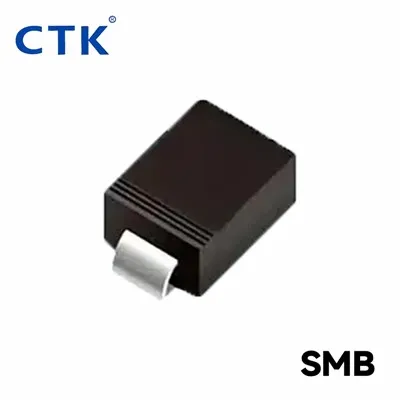
The package and mounting of diodes also vary depending on whether they are intended for 12V or 24V automotive systems. In 12V systems, where space is often at a premium, smaller package sizes are preferred. Surface – mount packages such as SOD – 123, SOD – 323, or SMB are commonly used in 12V automotive electronics due to their compact size and ease of integration onto printed circuit boards.
In 24V systems, which are often used in larger vehicles and industrial applications, there is sometimes more space available. However, due to the higher power requirements, diodes may need to have better heat – dissipation capabilities. This means that larger packages such as TO – 220 or TO – 247 may be used to accommodate heat sinks and ensure proper thermal management.
Reliability and Durability
Automotive grade diodes need to meet stringent reliability and durability requirements. In both 12V and 24V systems, diodes are exposed to harsh environmental conditions such as high temperatures, humidity, vibration, and shock.
However, 24V systems, which are often used in heavy – duty vehicles, may be subject to even more severe operating conditions. Diodes for 24V systems need to be more robust and able to withstand higher levels of stress. They are typically tested to more rigorous standards to ensure long – term reliability in these demanding environments.
Cost Considerations
Cost is an important factor in the automotive industry. In general, diodes for 12V systems may be less expensive due to their lower voltage ratings and potentially smaller package sizes. The manufacturing process for lower – voltage diodes is often more straightforward, which can result in cost savings.
Diodes for 24V systems, on the other hand, may be more expensive due to their higher voltage ratings, better thermal performance requirements, and more robust design. However, when considering the overall cost, it’s important to take into account the reliability and durability of the diodes. A more expensive but reliable diode can save costs in the long run by reducing the likelihood of component failures and costly repairs.
Conclusion
As an automotive grade diode supplier, understanding the differences between diodes for 12V and 24V automotive systems is crucial. These differences extend across various aspects such as voltage rating, current handling capability, forward voltage drop, thermal performance, transient protection, package and mounting, reliability, and cost. By carefully selecting the appropriate diodes for each type of system, automotive manufacturers can ensure the optimal performance, reliability, and safety of their vehicles.
Switching Diode If you are in the automotive industry and are in need of high – quality automotive grade diodes, whether for 12V or 24V systems, I encourage you to reach out. Our team of experts can help you make the right selection based on your specific requirements. We are committed to providing top – notch products and excellent customer service. Contact us today to start a discussion about your diode procurement needs.
References
- Massobrio, Paolo, and Giorgio Antonioli. "CMOS Analog Integrated Circuits for Wireless Communication." McGraw – Hill, 2001.
- Millman, Jacob, and Christos C. Halkias. "Integrated Electronics: Analog and Digital Circuits and Systems." McGraw – Hill, 1972.
- Horowitz, Paul, and Winfield Hill. "The Art of Electronics." Cambridge University Press, 2015.
Tongke Electronic Co., Ltd
Tongke Electronic Co., Ltd. is one of the most experienced automotive grade diode manufacturers and suppliers in China, featured by quality products and low price. Please rest assured to wholesale advanced automotive grade diode made in China here from our factory. Contact us for pricelist.
Address: No.3,Chayuan Rd, Street 3, AilingKan, Dalingshan, Dongguan, Guangdong, China.
E-mail: jack@ctk-elec.com
WebSite: https://www.ctkchip.com/
