If you’re in the solar space, you’ve probably wondered at some point: can the UL PV wire I stock for solar panels work for solar water heating systems? As a UL PV wire supplier who’s fielded this question dozens of times from installers, contractors, and even DIYers, I get the confusion. A lot of folks lump all solar wiring into one big bucket, but UL PV wire and what’s used for solar water heaters (SWHs) aren’t always interchangeable—though that doesn’t mean they never are. Let’s break this down like we would chatting over a coffee, no stuffy jargon, just real-world answers for anyone who’s wiring a SWH right now. UL PV Wire
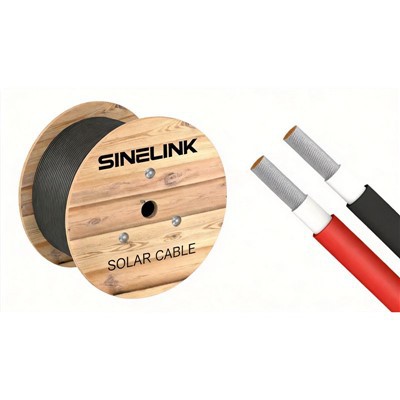
First, let’s get the basics straight so we’re all on the same page. UL PV wire is specifically listed under UL 4703, the standard for photovoltaic wiring. That means it’s built to hold up to the exact conditions of solar panel arrays: constant UV exposure, extreme temperature swings (think -40°F to 185°F), moisture, and even occasional abrasion from being routed along roof edges or over mounting racks. What most people don’t realize is that a lot of SWH systems—especially closed-loop, pressurized domestic ones—run on way lower voltage than solar panels. Most SWH pumps, sensors, and control circuits max out at 24V or 120V, compared to solar panels which can hit 600V or 1000V for grid-tied setups. That’s a big gap, right?
So why would anyone even ask if UL PV wire works here? For starters, installers already have bulk UL PV wire on hand, so grabbing extra for the SWH side saves on trips to the supply house. Plus, UL PV wire’s durability is a huge plus for roof-mounted parts of a SWH system—those lines run along the same roof edges, exposed to the same sun, rain, and wind as solar panels. But here’s where the catch comes in: not every part of a SWH system is the same, and not all uses of UL PV wire are allowed.
Let’s walk through the two main types of SWH systems because that changes everything. First, there’s active SWH systems—these have pumps that move water (or antifreeze, in closed loops) between the solar collectors on the roof and the storage tank. Second, passive SWH systems, which rely on natural convection to move fluid, no pump needed. For active systems, the most common parts that use wiring are the pump, the temperature sensors (one on the collector, one on the tank to tell the pump when to run), and the controller box that runs the whole show. All those components run low voltage, so technically, you could run UL PV wire there… but wait, there are rules.
The National Electrical Code (NEC) is the big guy here, and it’s not just a suggestion—if you’re doing a permitted installation, you have to follow it. NEC 2023 specifically spells out where UL PV wire is allowed, and where it’s not. PV wire is designed for “photovoltaic power production circuits” so it’s meant for the DC side of solar panel arrays, not general low-voltage wiring. That means you can use it for the wiring that connects the SWH’s controller to its pump or sensors only if you can make a case that it’s equivalent in performance to the listed wire the system’s manufacturer specifies. Wait, but UL PV wire is actually way more durable than, say, standard 14/2 thermostat wire that most SWH manufacturers list for their low-voltage controls. I’ve had installers tell me they ran PV wire for those control lines and never had a failure, but you do have to label it correctly per NEC. Most installers forget that part—PV wire has a distinct jacket color (usually black, sometimes white or red) vs. thermostat wire’s plain vinyl, so if it’s not labeled properly, inspectors will flag it.
Now, the other big part of a SWH setup that people think about: the power to run the entire system. Wait, no—most SWH pumps draw only a few amps, so that’s usually a standard 120V circuit wired with NM or THHN, but hold on. What if you’re pairing a small SWH with a small off-grid solar system? Let’s say you have a 500W panel for your cabin, powering both your lights and a small SWH pump. In that case, the wiring from the solar panel array to the battery or inverter is UL PV wire (required by NEC for PV arrays), and if your SWH pump runs off that same low-voltage DC power (common in off-grid cabins), then yeah, you can absolutely use the same UL PV wire for that circuit. That’s a huge win for off-grid folks who don’t want to stock two different types of wire.
But here’s where I’ve seen people get in trouble: trying to use UL PV wire for the actual fluid-carrying lines of the SWH. Wait, no—those are pipes, not wires. I’ve had a few new contractors mix that up, asking if PV wire can carry glycol, and no, that’s not what it’s for. The electrical wiring for the pump is separate, but the pipes are a whole other deal. Another mistake: using UL PV wire for the AC power cord plugging into the wall for a grid-tied SWH controller. NEC says AC power wiring has to be listed for general use, not just PV, so that’s a no-go. You can’t use PV wire for the line cord that plugs into a standard outlet, it has to be something like SJT or SO cord that’s listed for flexible AC applications.
Let’s talk real-world examples to make this concrete. Last year, a contractor in Arizona reached out to me—he was doing a 10-panel solar array for a residential home, and also installing a SWH system. He had 500 feet of unused UL PV wire left from the solar job, and wanted to use it for the 24V wiring running from the SWH’s roof collectors to its pump and controller. He checked with his local inspector, who said as long as he labeled the PV wire clearly as being used for SWH control circuits, it was fine. He saved almost $300 on wire that day, and a year later, he came back to order more PV wire for another job, saying that SWH wiring had zero issues in the extreme Arizona sun.
Another example: a DIYer in Colorado building an off-grid cabin. He wanted to power both his lights and his 12V SWH pump with a single 200W solar panel. He used UL PV wire for the panel’s array wiring, and ran the same PV wire to the SWH pump. He followed NEC rules for off-grid systems, and his setup has worked for two years without any wiring failures. That’s a perfect use case—same wire, same durable build, fits both systems.
But not every situation works. Last quarter, a beginner installer tried to use UL PV wire to run the 120V AC power for a grid-tied SWH’s circulation pump. The inspector caught it immediately—PV wire isn’t listed for AC branch circuits, so he had to rip it out and replace it with THHN wire. That’s a $200 mistake he could have avoided by calling me first to ask, which is why I always tell folks: if you’re not sure, shoot me a message, I’d rather answer 10 questions than have someone redo a job.
Now, let’s talk about the durability angle that makes UL PV wire a great fit for many SWH jobs. UL PV wire is rated for 1500V, which is way more than you’ll ever need for any SWH system—even the largest commercial SWH systems max out at 48V, which is nothing compared to PV array voltages. Its jacket is UV-resistant, so it won’t crack or degrade after three or four years of being exposed to the sun on the roof, which is a way bigger issue with standard thermostat wire that starts to fall apart in just two years of outdoor exposure. And it’s moisture-resistant, too, so rain or sprinklers hitting it won’t cause shorts, which is a must for roof-mounted wiring.
Wait, but what about commercial SWH systems? I get a lot of questions from commercial installers for apartment buildings or industrial facilities. Most commercial SWH systems are larger, with 120V or even 240V pumps. For those, the wiring that connects the pump to the building’s electrical panel has to be listed for AC branch circuits, so UL PV wire isn’t allowed there. But the wiring for the controller, sensors, and any low-voltage control signals? Yep, that’s a perfect use case. I supplied a 12-unit apartment complex last year, the installer used UL PV wire for all the low-voltage SWH controls, and he told me it was way easier than running separate thermostat wire that would have to be protected in conduit.
So to sum up the rules of thumb I give every customer:
- You can use UL PV wire for low-voltage (12V, 24V, 48V) SWH control circuits, sensor wiring, and DC power wiring for off-grid SWH systems, as long as you label it correctly per NEC.
- You can’t use it for AC branch circuits (120V/240V plug-in cords or wiring to building panels) for grid-tied SWH.
- It’s a great fit for outdoor-routed SWH wiring because of its UV and moisture resistance, way better than standard general-purpose wire.
I know it’s easy to get confused between all the different wire types for solar and SWH—there’s PV wire, THHN, NM, thermostat wire, SO cord, the list goes on. That’s why as a UL PV wire supplier, I make it a point to not just sell wire, but to help folks use it correctly. I get calls every week from installers and DIYers asking if a wire they have works for a specific job, and I’d rather walk them through the do’s and don’ts than have them make a costly mistake.
If you’re right now planning a SWH installation and wondering if your existing UL PV wire will work, feel free to reach out. Tell me what type of system you’re installing (active vs passive, grid-tied vs off-grid), where the wiring is running, and I’ll give you a clear answer on what’s allowed. No stuffy technical manuals, just straight talk from someone who’s been in the solar wiring game for years, working with installers just like you.
Home Energy Storage System References:
- National Electrical Code (NEC) 2023 Article 690 (Photovoltaic Systems) and Article 725 (Low-Voltage Circuits)
- UL Standard 4703, Standard for Photovoltaic Wire and Cable
- Solar Rating & Certification Corporation (SRCC) SWH System Requirements for Electrical Wiring Components
Tianjin Xilingke New Energy Technology Co., Ltd.
As one of the most professional ul pv wire manufacturers and suppliers in China, we’re featured by quality products and low price. Please rest assured to wholesale durable ul pv wire made in China here from our factory. For quotation, contact us now.
Address: Suite 2601, Tower B, Wanghai International, Haihe East Road, Hebei District, Tianjin, China.
E-mail: robin@sinelinkev.com
WebSite: https://www.sinelinkenergy.com/
