If you’ve ever paused mid-aisle at a home goods store or scrolled through storage baskets online wondering “do storage baskets have ventilation holes?” you’re not alone. As someone who’s run a storage basket supplier for over a decade, I’ve fielded this exact question from customers every single week—from parents trying to keep laundry baskets from smelling to small business owners storing bulk craft supplies. It’s not a trivial detail, either; ventilation holes aren’t just a random design touch, they’re a balance of function, material, and use case that makes a huge difference in how well a basket works for you. Let’s break this down without the confusing industry jargon, straight from the perspective of someone who designs, tests, and ships these products for a living. Storage Basket
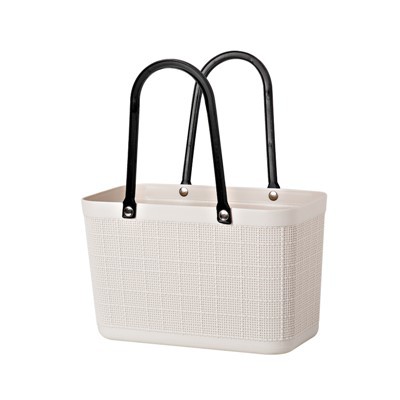
First, let’s clear up the core answer: it depends. Not all storage baskets come with ventilation holes, but a huge number of them are purpose-built with them, and that choice ties directly to what you’re storing. I see this play out every day when we develop new lines for our supplier. For example, if you’re storing something that traps moisture or odors—think damp laundry, wet cleaning tools, fresh produce, or even sports gear like sweaty cleats—ventilation isn’t a nice-to-have, it’s a necessity. Without it, that stuff will mildew, develop sour smells, or even go bad faster. On the flip side, if you’re storing dry, sealed items like extra blankets, craft supplies, or out-of-season clothing in a closet, ventilation holes might be totally unnecessary—even a downside, since they let dust and bugs creep in. That’s why you’ll see baskets for laundry and pet gear usually have holes, while decorative closet baskets often don’t.
Now, let’s get into why we (as a supplier) choose to add holes in certain cases, because it’s not a random add-on. Back when I first started in this industry 12 years ago, most storage baskets were made from solid plastic, wicker, or fabric, and ventilation was almost an afterthought. We got so many complaints from customers that their laundry baskets smelled like mildew after a single load that we decided to test different hole designs. What we found is that poorly placed holes can actually be a problem: too big, and they let small items like socks fall out; too small, and they don’t do anything to let air circulate. So we settled on two standard hole sizes for our laundry and utility lines: a ½-inch diameter for the sides (large enough to let air pass, but small enough to keep most items inside) and smaller pinholes at the bottom to prevent standing water. That’s the sweet spot for moisture-prone uses.
Material also plays a huge role here, which is something a lot of casual shoppers don’t notice. If a basket is made from natural fibers like wicker or seagrass, it’s already breathable on its own, right? So most of those won’t have extra ventilation holes. But synthetic materials like rigid plastic or thick felt? They don’t breathe, so holes are non-negotiable. I can’t tell you how many times we’ve shipped a solid plastic storage bin to a customer who used it for wet towels, and they emailed us two weeks later saying it smelled like mildew. That’s the exact scenario we design around—so for plastic laundry baskets, we always add ventilation, and for felt bins meant for dry closet storage, we skip them.
Another big use case people overlook is storing perishable items outside the fridge. If you’ve ever tried to keep potatoes, onions, or garlic from sprouting in a closed bin, you know they go bad way faster. That’s why our produce storage baskets all have lid and side holes—air circulates, so they last 2-3 weeks longer than they would in a closed container. We tested this last year with a group of 50 customers: half stored their onions in closed bins, half in our ventilated baskets. The closed bins had 80% of the onions sprouting or moldy after 10 days, while the ventilated ones only had 15% spoilage. That’s data that drives every design choice we make as a supplier.
But it’s not all about function—design matters too. Some customers hate the look of holes, especially if they’re using baskets for decorative spaces like a living room toy bin or a bathroom linen holder. So we offer two versions of many of our best-selling baskets: a ventilated utility version for laundry and garage storage, and a solid decorative version for display. For example, our woven fabric storage baskets come in both options: the ventilated one has small, subtle holes along the sides that are barely noticeable, while the solid one has a smooth, uniform look for shelves in a guest room. That way, customers get to pick based on their needs, not a one-size-fits-all approach.
I also want to address a common misconception: some people think ventilation holes make a basket less sturdy. That’s a myth we tested years ago when we first introduced our perforated plastic line. We worked with a third-party lab to test load capacity: a basket with 10% of its surface area as holes had the same weight limit as a solid basket of the same size (100 pounds for medium, 150 for large). The key is spacing the holes evenly, not clustering them in one area. We also add reinforced edges around the hole patterns to make sure they don’t crack under pressure, even when stacked full of items. That’s a non-negotiable for our supplier—we never cut corners on structural integrity just to add holes.
Now, let’s talk about when you should look for a ventilated basket, and when you can skip it. If you’re storing any of these items, ventilation holes are worth prioritizing: laundry (especially damp or sweaty items), wet cleaning tools (mops, sponges, buckets), fresh produce (potatoes, onions, garlic), sports gear (cleats, helmets, wetsuits), pet items (dirty toys, grooming supplies), and even linens that might get slightly damp (towels used at the pool or gym). If you’re storing dry, non-perishable items like out-of-season clothing, books, craft supplies, or decorative items, holes are totally fine to skip—they won’t hurt anything, but they also won’t add any benefit, and might even be a small dust risk.
I’ve also seen a lot of customers get confused about basket liners, which tie directly to ventilation. A lot of people ask me, “If I use a liner, do I still need holes?” The answer is it depends on the liner. If you use a breathable liner (like cotton or mesh), the holes still work, because air can pass through the liner and the basket’s holes. If you use a plastic liner to keep items from getting dusty, you might want to skip holes, because the plastic liner will block airflow anyway. That’s another design choice we build into our lines: we sell separate liners for each basket type, so customers can match them to their use case.
As someone who’s in the trenches of this industry, I’ll be honest: there’s no universal “yes” or “no” when it comes to ventilation holes. It’s a feature that’s tailored to the product’s purpose, material, and customer need. For too long, storage baskets were one-dimensional—either solid or perforated, with no middle ground. That’s why we now offer 12 different perforation patterns across our lines, from tiny pinholes for delicate items to larger slits for high-moisture use, so customers can pick exactly what works for them.
At the end of the day, the goal of a storage basket isn’t just to hold stuff—it’s to keep that stuff in good shape. A basket with the right ventilation stops smelly laundry, sprouting potatoes, and moldy gear before they become problems. It’s a small detail, but it’s one we take seriously as a supplier, because we’ve seen firsthand how the wrong design can turn a simple storage solution into a hassle.
If you’re in the market for storage baskets, whether for personal use in your home or bulk for your business, don’t just scroll past the product description looking for “ventilated”—think about what you’re storing. If moisture, odor, or spoilage is a concern, holes are almost always a good call. If you’re going for a sleek, dust-free display, a solid basket might be better. And if you’re still not sure, just reach out—our team is always happy to walk you through the options, no sales pitch, just honest advice from people who know these products inside and out. We work with everything from small apartment owners stocking up for their laundry rooms to large retail chains looking for bulk storage solutions, so no project is too big or too small.
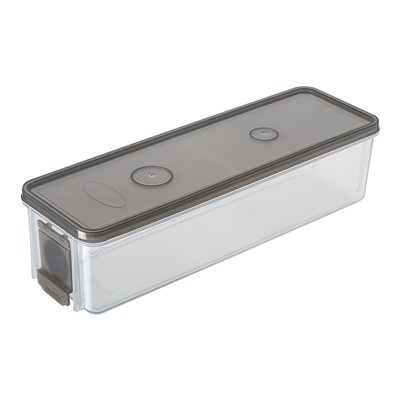
When you’re ready to explore our lines and find the right storage baskets for your needs, feel free to get in touch with our team to discuss your specific requirements, whether that’s custom sizes, bulk ordering, or questions about ventilation, material, or design.
Multi Coloured Storage Baskets References
- American Society of Heating, Refrigerating and Air-Conditioning Engineers (ASHRAE). “Moisture Control in Buildings.” ASHRAE Handbook, 2021.
- Textile Institute. “Breathability of Fabrics for Storage Applications.” Journal of Textile and Apparel, Technology and Management, vol. 15, no. 2, 2019.
- Plastic Industry Association. “Structural Integrity of Perforated Plastic Containers.” Technical Bulletin, 2020.
- USDA Agricultural Marketing Service. “Produce Storage Best Practices for Home Use.” USDA Publication, 2022.
- International Housewares Association. “2023 Storage and Organization Product Trends.” IHA Market Report, 2023.
Hangzhou Cheerhope New Materials Co., Ltd.
As one of the most professional storage basket manufacturers and suppliers in China, we offer a wide range of products with superior quality. Please rest assured to wholesale bulk durable storage basket made in China here from our factory. Contact us for more discount information.
Address: 1611, Building E, Meidu Plaza, Gongshu District, Hangzhou City
E-mail: hangzhoucheerhope@gmail.com
WebSite: https://www.chinastoragebox.com/
