Hey there, fellow industrial folks! Let’s cut to the chase—if you’re running a factory, warehouse, or any space that relies on big industrial fans, you know a regulator isn’t just a “nice-to-have.” It’s the thing that keeps your fan from blowing too hard (wasting energy) or not hard enough (making your space too hot/cold). But here’s the question I get at least a dozen times a week from buyers like you: “Are there actual rules, not just random guidelines, for these regulators?” Industrial Fan Regulator
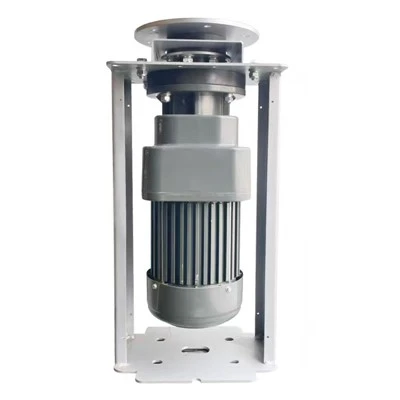
Short answer: Yep, there are. But it’s not as straightforward as checking a single box. Let me break this down like I would chatting with a regular at the shop—no stuffy jargon, just the real stuff that matters when you’re picking a regulator that’ll actually work and keep you compliant.
First, let’s start with the big ones for electrical and industrial gear. The most universal base standard we deal with is IEC 60947-5-1. Wait, that’s the International Electrotechnical Commission’s standard for low-voltage switchgear and controlgear. Why does that apply to fan regulators? Because most industrial fan regulators run on low-voltage power (usually 240V or 480V, nothing crazy high), so they have to meet safety rules for not shocking anyone, not overheating, not catching fire if something goes wrong.
Here’s the thing—if you’re selling or buying regulators in North America, you’ll see a lot of NEC (National Electrical Code) stuff too. NEC Article 430 specifically covers motors and their control gear, which includes fan regulators. NEC doesn’t just say “make it safe”—it tells you things like how the regulator has to handle overloads, how much current it can safely carry, and even where you can mount it so it doesn’t get damaged by dust, oil, or whatever your factory throws at it.
Wait, but what about if you’re dealing with variable frequency drives (VFDs), which are the fan regulators a lot of people use now instead of old-school rheostats? Oh right, VFDs have their own set of rules, mostly IEC 61800-3 for adjustable-speed electrical drives. That one’s big for electromagnetic compatibility (EMC). Because if your regulator emits too much electrical noise, it can mess with other gear on your factory floor—like PLCs, sensors, even your warehouse’s security cameras. No one wants a fan regulator that accidentally breaks the machine next to it, so EMC standards are non-negotiable here.
Let’s get into the nitty-gritty that most buyers don’t ask about but should. For example, if your industrial space is a hazardous area—think places with explosive dust (like grain elevators, sawmills) or flammable gases (chemical plants)—you can’t just grab any regulator. You need ones that meet ATEX standards in Europe, or NFPA 70 (the NEC’s hazardous area rules) in the US. These regulators have to be explosion-proof, sealed so no sparks can get out and ignite whatever’s floating around. Last month, I had a guy from a grain mill call me because his old regulator sparked and nearly caused a dust explosion—luckily no one got hurt, but he learned fast that standard regulators don’t cut it in those spaces. So if your operation is in a hazardous zone, don’t skip this part.
Now, let’s talk performance standards, not just safety. A lot of people think regulators are just “turn a dial, fan goes faster.” But if it doesn’t regulate correctly, you’re wasting money. There’s a standard called ISO 12100 for machinery safety, which applies to fans since they’re part of your production equipment. It says regulators have to be accurate—if you set it to 50% speed, it shouldn’t jump to 70% because of a faulty component. It also has to have fail-safes, right? Like if the power goes out, the regulator shouldn’t just spin randomly when it comes back on— it should reset to a safe speed. That’s not just a convenience; that’s a safety rule for your workers and your gear.
Wait, what about energy efficiency? These days, everyone’s trying to cut utility costs. There’s the EU’s ErP (Eco-design for Energy-related Products) directive, and in the US, DOE (Department of Energy) rules for industrial fans and their controls. If you sell regulators in the EU, they have to meet ErP minimum efficiency levels for VFDs, which means they can’t waste more than a certain percentage of energy as heat. In the US, DOE has similar rules that came into effect a few years back, so any regulator you buy there has to check that box too. I’ve seen cheap knockoff regulators from overseas that skip this—they’re $50 cheaper, but they use 20% more energy, so you’ll pay that back in 6 months. Not worth it.
But hold on—standards aren’t one-size-fits-all. Let’s be real, if you’re a small machine shop with a single 3-phase fan, you don’t need a regulator that meets ATEX for explosive gas. If you’re a chemical plant, you do. That’s why it’s not just about “meeting standards”—it’s about matching the standard to your specific use case.
Here’s a common mistake I see: buyers just Google “industrial fan regulator” and pick the cheapest one. But that cheap one might not even have the right certification. Last quarter, a guy from a small warehouse bought a regulator from a random online seller, and it didn’t have NEC certification. When his electrician wired it, he said it wouldn’t pass inspection. So he had to throw the $200 regulator away and buy a compliant one from us, which cost a bit more but saved him from a fine (inspectors in most places will shut you down if your electrical gear isn’t up to code).
Another thing: certifications aren’t just stickers. Legitimate regulators will have third-party testing—like UL (Underwriters Laboratories) in the US, CE (Conformité Européene) in Europe, or CSA (Canadian Standards Association) in Canada. If a seller can’t show you proof of third-party testing, walk away. I always keep copies of our UL, CE, and ISO test reports handy when a buyer asks—no hidden stuff, just proof that our regulators are up to par.
Now, let’s talk about what doesn’t have a hard standard, but you should still check. Like, if your regulator is going to be outside, on a loading dock or a greenhouse, it needs to be IP-rated (Ingress Protection) to keep water, dust, and bugs out. IP ratings aren’t a “regulatory standard” per se, but a lot of industrial safety codes reference them. For example, IP55 means it’s dust-tight and can handle low-pressure water jets—perfect for outdoor use. If you get a regulator with IP20, it’s only protected from big solid objects, so rain will fry it in a month. That’s a quick check that saves you a lot of hassle.
Wait, let’s wrap this up so it’s useful for you. Here’s the quick list of what to look for when buying an industrial fan regulator to make sure it’s compliant:
- For general indoor use: Check UL/CE certification (matches IEC 60947-5-1 and NEC Article 430)
- For hazardous areas: ATEX (EU) or NFPA 70 (US) certifications for explosion protection
- For energy efficiency: ErP (EU) or DOE (US) compliance to avoid extra utility costs
- For outdoor use: IP54 or higher rating to handle the elements
Now, why does this matter to you, the buyer? Because non-compliant regulators can lead to:
- Electrical fines from OSHA or your local building department
- Fire hazards or equipment damage
- Higher energy bills (like that cheap knockoff I mentioned)
- Downed production lines when a faulty regulator breaks mid-shift
As someone who’s been supplying industrial fan regulators for over 10 years, I’ve seen all these issues. That’s why I never push a one-size-fits-all product on a buyer. If you tell me you need a regulator for a regular factory fan, I’ll point you to our UL-listed VFDs. If you need one for a grain elevator, I’ll hook you up with our ATEX-certified explosion-proof models. No upselling, just the right product for your needs.
So, if you’re tired of guessing if your next fan regulator is compliant, or you’ve had a bad experience with a cheap, non-standard one before, hit me up. I don’t do sales pitches that sound like AI (I swear, I’m a real guy who’s been around industrial fans since I was a kid helping my dad fix his warehouse’s ventilation). Just tell me what your space is like—factory, warehouse, hazardous area, whatever—and I’ll walk you through exactly what you need, no hidden fees, no confusing jargon.
Don’t wait until your inspector shows up or your old regulator fries your new fan. Get a regulator that’s not just cheap, but compliant, safe, and works for your setup. Reach out to chat, and we’ll make sure you’ve got the right gear.
Stretch Wrapper Control System References
IEC 60947-5-1, Low-voltage switchgear and controlgear – Part 5-1: Control circuit devices and switching elements – Electromechanical control circuit devices
National Electrical Code (NEC) Article 430, Motors, Motor Circuits, and Controllers
IEC 61800-3, Adjustable speed electrical power drive systems – Part 3: EMC requirements and test methods
ATEX Directive 2014/34/EU, Equipment and protective systems intended for use in potentially explosive atmospheres
ISO 12100, Safety of machinery – General principles for design – Risk assessment and risk reduction
U.S. Department of Energy (DOE), Energy Conservation Program: Energy Conservation Standards for Industrial Motor-Driven Equipment
Wuxi Rstar Electric Co., Ltd.
With abundant experience, we are one of the most professional industrial fan regulator manufacturers and suppliers in China. Welcome to wholesale bulk customized industrial fan regulator at competitive price from our factory. If you have any enquiry about quotation, please feel free to email us.
Address: 9th Floor, Building 9, Shengfeng Lianzhi Valley, No.67 Zhujiang Road, Xinwu District, Wuxi City
E-mail: rstarbz@163.com
WebSite: https://www.rstar-wx.com/
