Hey everyone, Surface Finishing
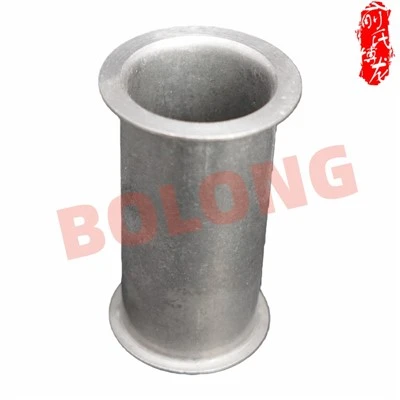
If you’ve ever rolled out a fresh coat of paint on a wall only to have it chip off a few months later (guilty of that with my old bedroom door—total headache), you know how frustrating bad coating adhesion is. But here’s the thing: most of the time, it’s not the coating itself that’s the problem. It’s the surface it’s sticking to. As a surface finishing supplier, I’ve seen this play out thousands of times with everything from industrial metal parts to automotive trim, and let me tell you—surface finishing isn’t just a “prep step.” It’s the secret sauce that makes or breaks whether your coating actually stays put.
Let’s break this down real, no-jargon style. First, I need to clarify something: when people say “adhesion,” they mean the bond between the coating and the base material. Think of it like gluing two pieces of paper together—if one is crumpled and the other is smooth, the glue can’t grab both right. Surface finishing is what you do to that base material before applying the coating to make that bond strong. I’ve worked with aerospace engineers, automotive line managers, and even small-batch furniture makers, and they all keep asking the same question: why does my coating peel on some parts and stick like crazy on others? The answer almost always traces back to what we do to the surface before paint or powder goes on.
Let’s start with the biggest effect: surface roughness. Wait, roughness isn’t just “how bumpy a surface is”—it’s the shape of those bumps, and trust me, it matters. If you have a totally smooth surface (like a polished stainless steel part), the coating has nowhere to grip. It’s like trying to stand on an ice rink—zero traction. When we do a mechanical finish like sandblasting or grit blasting, we create tiny, microscopic peaks and valleys on the surface. The coating flows into those valleys as it dries or cures, forming what we call “mechanical interlocking.” That’s just a fancy way of saying the coating is physically locked into the little crevices, like a key in a lock.
I once had a customer in the agricultural parts space who was having major issues with his tractor hitch coatings peeling off within a year out in the fields. His pre-treatment was just wiping the parts down with a degreaser—no roughness at all. We suggested a medium-grit blast finish to add micro-roughness, and after that, his adhesion testing (he uses a cross-hatch test, if you’re curious) went from a 2 out of 5 to a perfect 5. That’s a night-and-day difference, and it’s all because we gave the coating something to hold onto. But here’s the catch: too much roughness is bad, too. If we blast a surface so hard that it has deep, jagged peaks and craters, those peaks can trap air, oil, or moisture that gets stuck under the coating. That air pocket weakens the bond, and eventually, the coating lifts off. We always test roughness profiles (using a surface profilometer, basically a little device that runs a needle over the surface to map the bumps) to get that sweet spot—usually between 1 and 10 microns for most metal coatings, depending on the application.
Next up: surface cleanliness. This is non-negotiable, no exceptions. Even a tiny bit of residual oil, grease, rust, or dust on the surface is like putting a slip-and-slide between the base material and the coating. I had a small appliance maker come to me a while back because their powder-coated fridge panels were peeling at the edges, right where the parts were handled during assembly. Turned out, their stamping process left behind a thin layer of stamping oil that their degreaser wasn’t fully removing. We switched them to a solvent-based alkaline clean followed by a rinse and a dry-off, and that edge peeling stopped cold.
Different contaminants require different finishes, too. For heavy oil or mill scale on steel, we use a combination of alkaline cleaning and a light blast to knock off the scale. For aluminum parts, which are super prone to forming oxide layers (that dull, chalky stuff you see on old aluminum cans), we do a deoxidation finish with a mild acid to strip the oxide layer before coating. Those oxide layers are brittle and weak, so if you leave them on, the coating can’t bond to the actual aluminum metal—it’s bonding to a crumbly oxide layer that falls apart easily. Another trick we use is a phosphate conversion coating for steel parts. It’s a thin, crystalline layer that forms on the metal surface, and not only does it lock in extra corrosion resistance, it gives the coating a textured surface that boosts adhesion even more. I’ve seen phosphate coatings pull adhesion scores up by 30% on steel fasteners alone.
Then there’s surface chemistry. This is a bit more behind-the-scenes, but it’s just as important as roughness or cleanliness. Every base material has its own surface energy—think of it as how “wettable” the surface is. A high surface energy surface is like a fresh dish: water spreads out evenly, which means the coating will flow evenly and bond well. A low surface energy surface is like a Teflon pan: water beads up and rolls off, so the coating can’t spread, leaving gaps or weak spots in the bond.
Plastics are a huge example here. A lot of customers try to coat polypropylene (PP) or polyethylene (PE) because they’re durable, but those plastics have super low surface energy, just like Teflon. If you just paint them, the paint beads up and peels. What do we do? We use a plasma finish or a corona treatment to boost their surface energy temporarily (though it lasts long enough for coating) by breaking the molecular bonds on the plastic surface, creating polar groups that the coating can stick to. I had a customer making plastic toy components who was using off-the-shelf spray paint that peeled off the PP plastic almost immediately. After a quick plasma treatment, his adhesion passed all his drop tests, and he cut his rework rate by 40%—that’s real money saved.
Don’t get me started on corrosion resistance, either—wait, no, actually, adhesion and corrosion resistance go hand-in-hand. A lot of people think of corrosion as just rust, but surface corrosion starts way before you can see it. If you leave a steel part with a tiny bit of surface rust before coating, that rust expands over time, pushing the coating off from underneath. Our conversion coatings (like zinc phosphate or iron phosphate) don’t just boost adhesion—they act as a barrier that stops corrosion from starting in the first place. I worked with a construction equipment company that tested our zinc phosphate finish on their steel beams vs. a competitor’s simpler blast finish. Our parts had 2x better adhesion and lasted 3 years longer in salt spray testing, which is basically the accelerated version of being out in the rain and snow.
Now, let’s talk about the real-world impact of all this, because at the end of the day, this isn’t just lab talk. For automotive parts, poor adhesion means coatings peel off while a car is still under warranty, leading to costly recalls and bad customer reviews. For aerospace components, it’s a safety issue—peeling coatings can expose metal to corrosion at 30,000 feet. For small businesses, it means rework, lost revenue, and unhappy customers. I’ve had customers tell me that switching to our optimized surface finish cut their scrap rates by thousands of dollars a month. That’s not a small win.
But here’s the thing: every job is different. A finish that works for aluminum car trim won’t work for a carbon fiber bike frame. A blast finish works great for steel, but you have to be super careful with soft materials like magnesium or brass because too much blast can etch the surface too deep or even cause micro-cracks that weaken the part itself. That’s why we do a surface analysis first for every customer—we test the base material, the application environment, the type of coating they’re using, and their performance goals, then tailor the finish exactly to their needs. I can’t tell you how many times a customer has come in thinking they just need a “generic blast” and end up needing a combination of cleaning, etching, and conversion coating to get the adhesion they’re after.
Common mistakes I see all the time: skipping surface roughness testing, cutting corners on cleaning to save time, using the same finish for every material, and testing adhesion too soon (coating needs to cure fully before adhesion tests—wait 24 hours minimum, trust me). Another big one: handling parts after pre-treatment with bare hands. The oils from your skin transfer to the surface, and even a tiny fingerprint can ruin the entire bond. We have to use nitrile gloves, and our parts go straight from pre-treatment to coating lines—no waiting around in a dirty shop floor.
So what does this all mean for you? If you’re struggling with coating adhesion, don’t just blame the coating. The surface it’s sticking to is the main variable you control. Whether you’re a small shop doing custom metal parts or a big manufacturer making components for cars, appliances, or aerospace, investing in the right surface finish isn’t an extra cost—it’s an investment in longer-lasting parts, less rework, and happier customers.
If you’re dealing with peeling coatings, weak adhesion, or just want to make sure your next project sticks as good as possible, I’m here to help. We do free surface consultations, test sample parts, and tailor finishes to exactly what you need. No one-size-fits-all, no jargon, no runaround—just real solutions for real adhesion problems.
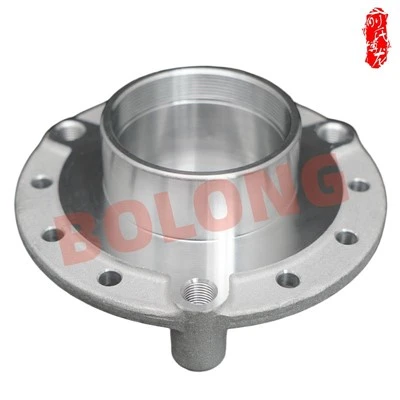
Reach out and let’s chat about your project.
Process References:
- Surface Preparation and Coating Adhesion: A Review, Journal of Coatings Technology and Research, 2018
- The Effect of Surface Roughness on Mechanical Adhesion of Polymer Coatings, Progress in Organic Coatings, 2020
- Surface Energy Modification for Improved Adhesion of Polymeric Coatings on Low-Energy Substrates, International Journal of Adhesion and Adhesives, 2019
- Correlation Between Surface Finish Parameters and Coating Adhesion for Industrial Metal Components, Surface Engineering, 2021
- Corona and Plasma Treatments for Surface Energy Enhancement: Applications in Coating Adhesion, Journal of Applied Polymer Science, 2017
Ningbo Fenghua Bolong Machinery Manufacturing Co., Ltd.
Ningbo Fenghua Bolong Machinery Manufacturing Co., Ltd. is one of the most professional surface finishing manufacturers and suppliers in China, also supports high quality customized service. With abundant experience, we warmly welcome you to buy durable surface finishing made in China here from our factory.
Address: No. 27 Hehai Road, Binhai New Area, Fenghua Economic Development Zone, Ningbo City, Zhejiang Province
E-mail: seven@nbbolongmachinery.com
WebSite: https://www.nbbolongmachinery.com/
