If you’ve ever stood in a customer’s driveway during a fence installation, watching them back a pickup truck loaded with a trailer full of wooden posts and metal rails, I’ve seen the same question cross their mind a hundred times: Is this thing supposed to feel this squirmy? As a fence trailer supplier, I don’t just sell units that hold materials— I build them with the handling nuances of everyday drivers in mind. Over the last 12 years of working with contractors, ranchers, and weekend DIYers, I’ve learned that towing a fence trailer doesn’t just change how much you carry—it rewires how your vehicle interacts with the road, and getting that balance right is the difference between a smooth trip and a close call. Fence Trailer
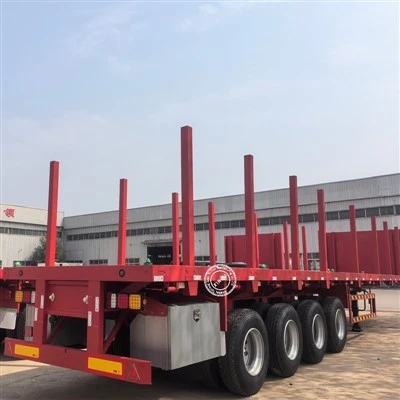
Let’s start with the basics, because most folks don’t connect the dots between a trailer’s design and their vehicle’s weight distribution. A fence trailer isn’t the same as a tiny u-haul you use for moving a couch—mine are built to haul 2,000 to 7,000 pounds of uneven, often bulky materials: rolls of wire that can shift, bundles of posts that stick out, and half-assembled fence panels that aren’t shaped like a standard box. That irregular load isn’t a trivial detail, either. When you tow, two key parts of your vehicle take the brunt: the rear axle and the hitch, which is mounted to the frame just behind your back bumper. Every pound on that trailer pushes down on your hitch, and that pushes up a little on your truck’s rear end. The tradeoff? The front end of your vehicle—where your steering and brakes live—loses weight.
I see this happen all the time with first-time buyers. They tow a fully loaded fence trailer down a country road at 55 mph, and suddenly they’re fighting to keep the truck straight when a semi passes. Why? Because with less weight on the front tires, there’s less friction between the rubber and the asphalt to hold a line. Think of it like riding a bicycle with no hands: you need a little weight on the handlebars to stay balanced. Same idea here. I worked with a fencing crew in West Texas last year who upgraded from an old single-axle trailer to one of our dual-axle units, and they came back saying their highway trips dropped their steering correction by 30%—they stopped overadjusting every time a car went by, which cut down on road wear for both their truck and their trailer.
Braking is another area where towing a fence trailer throws handling off, and it’s not just about how fast you stop. The extra weight behind your vehicle extends your stopping distance. A standard half-ton pickup can stop from 60 mph in about 190 feet when empty; add a 5,000-pound loaded fence trailer, and that number jumps to over 300 feet. What most people don’t account for is that your truck’s front brakes do most of the work when stopping, and again—if that front end is light, those brakes can’t grip as well as they should. I always tell customers to add a brake controller to their setup, not because it’s a “nice to have,” but because it syncs your truck’s brakes to the trailer’s, so you’re not fighting the weight of the trailer mid-stop. Last month, a guy from a residential fencing company told me he had a fender bender early in his career because he towed without a controller—he tried to jam on his truck’s brakes to avoid a deer, and the trailer pushed past him, knocking into the back of a parked truck. That’s the kind of story that makes me emphasize this stuff, not just because I sell parts, but because it’s safety.
Turning and maneuvering are where a lot of folks get into the most trouble, especially when they’re hauling fence materials. Fence trailers have a longer wheelbase than most small utility trailers—they’re built to carry 16-foot rolls of wire and 8-foot posts, so the distance between the front and rear axles is longer. That means your turning radius gets bigger. If you’re used to making a left turn into a driveway in your empty truck, adding a loaded fence trailer can make that turn too tight—you’ll clip the curb, or even the corner of a building, because the rear wheels of the trailer don’t follow the same path as your truck’s wheels. I recommend a “wide turn” practice the first time someone tows our trailer in a new area: pick an empty parking lot, make slow left and right turns, and note how much extra space you need. Even seasoned contractors forget this, and I’ve seen more than one trailer scrape a fence post during a job site turn because they didn’t account for that extra space.
Wind is another factor that’s unique to towing fence trailers, especially if you’re hauling tall or protruding materials. A fence trailer loaded with 8-foot panels of steel is like a sail on wheels—catch a gust of crosswind on an open highway, and that force can push the trailer sideways, pulling your vehicle off course. I had a customer in Oklahoma last spring who was towing a 6,000-pound trailer loaded with wire rolls and corner posts, and a sudden gust of wind near a construction zone made him swerve into the next lane. The key here isn’t just driving slower—it’s how the trailer is balanced. When our customers load the heaviest materials (like concrete corner posts) low and centered on the trailer, not stacked high near the back, it lowers the center of gravity and makes it far less vulnerable to wind. I include a loading guide with every trailer we sell, and I go over it in detail during the pickup or delivery—because a little load management goes a long way in handling.
Now, I’m not here to say towing a fence trailer is all risk—my team designs every unit to mitigate these handling issues, because we know most of our customers are relying on these trailers to put food on the table. Let’s talk about the engineering tweaks we make that make a real difference. First, all our fence trailers have a frame reinforced with high-tensile steel, which reduces flex. A flexible frame wobbles more under load, especially on rough gravel road job sites, making steering feel unsteady. We also use wide, all-terrain tires that distribute weight better than narrow tires, and we add electric brakes on all axles for units over 3,000 pounds. The biggest design choice we’ve made is integrating a weight distribution hitch mount directly into the trailer’s frame, not just a bolt-on add-on. That mount balances the weight between the truck’s front and rear axles, so you don’t lose that steering grip when you’re loaded.
I also want to address a common myth: bigger trailers are worse for handling. That’s not true when they’re built right. We had a customer who was using a small single-axle trailer for his small fencing business, and he upgraded to our 7,000-pound dual-axle unit two years ago. He told me he noticed better handling on highway trips, because the dual axles spread the weight more evenly, and the wider wheelbase made the trailer less sway-prone than his old single-axle trailer, which would fishtail if he hit a pothole. The key is matching the trailer to your vehicle’s towing capacity, not just how much weight you need to carry. A half-ton pickup can safely tow up to 10,000 pounds in many cases, but if you put 6,000 pounds in a tiny single-axle trailer built for 3,000 pounds, you’re asking for handling problems, no matter what size your truck is.
Maintenance is another piece of the puzzle that most people overlook, and it has a direct impact on handling. If your trailer’s tires are underinflated, or your hitch ball is worn down, the trailer will handle like a loose bag of nails. I tell every customer to check their tire pressure before every trip—underinflated tires cause more sway, and overinflated ones make the ride harsh and hard to control. They should also inspect their hitch and safety chains regularly, because a loose connection can make the trailer pull to one side or fishtail. Last year, I had a customer bring in a trailer that was pulling hard to the right, and we found that the tire on the right rear axle was flat—he’d noticed it the night before but figured he could make it to the job site. That’s the kind of small issue that can turn a routine trip into an accident, so I make sure to emphasize that regular maintenance isn’t just for keeping your trailer running—it’s for keeping you safe on the road.
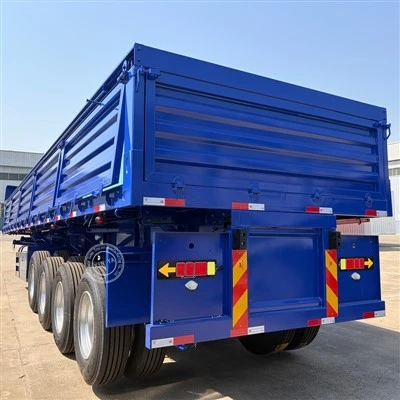
For anyone who’s new to towing a fence trailer, I have a few practical tips that I’ve picked up over the years. First, start slow. Don’t take your new trailer on a highway trip right away—drive around your neighborhood or a quiet backroad for a few days to get used to the feel of it. Notice how the steering responds, how the brakes feel, and how much space you need to turn. Second, leave extra space between you and the car in front of you. If you’re towing, that stopping distance jumps, so a 3-second gap is the minimum, and 4 to 5 seconds is better. Third, never exceed your vehicle’s towing capacity. Every truck has a gross vehicle weight rating (GVWR) and a gross combined weight rating (GCWR)—that’s the total weight of your truck, trailer, and load combined. Exceeding that number isn’t just bad for your vehicle—it makes handling unstable and dangerous.
Lowbed Semi Trailer At the end of the day, towing a fence trailer is about balancing capability and control. It’s not just about how much you can carry—it’s about being able to get that load to the job site safely, so you can do the work you set out to do. As a fence trailer supplier, that’s what I care most about: building units that work with your vehicle, not against it, so you can focus on what you do best—installing fences. If you’re in the market for a trailer that’s built for consistent handling, or you have questions about matching a trailer to your vehicle, don’t hesitate to reach out and connect. We’d be happy to walk through your needs and find the right solution for your business.
References
- National Highway Traffic Safety Administration. (2021). Towing Safety Guidelines for Light-Duty Vehicles. U.S. Department of Transportation.
- Society of Automotive Engineers. (2019). Vehicle-Trailer Handling Dynamics and Weight Distribution Best Practices. SAE International.
- American Trailer Manufacturers Association. (2022). Fence Trailer Design and Load Management Standards. ATMA Technical Report.
- University of Transportation Studies. (2020). The Impact of Crosswind and Weight Distribution on Towing Stability. Journal of Transportation Safety.
- Truck Manufacturers Association. (2023). Towing Capacity and Handling Characteristics for Half-Ton and Heavy-Duty Pickups. TMA Technical Brief.
Shandong Yuncheng Xinya Trailer Manufacturing Co., Ltd.
Shandong Yuncheng Xinya Trailer Manufacturing Co., Ltd. is one of the most experienced fence trailer manufacturers and suppliers in China, featured by quality products and good service. Please rest assured to buy CE approved fence trailer from our factory. Contact us for customized service and OEM service.
Address: No. 008, Hexie Road, Yangzhuangji Town, Yuncheng County, Heze City, Shandong Province
E-mail: fiona@xinyatrailer.com
WebSite: https://www.china-truckfactory.com/
